
Heavenly Game
Saying goodbye to my father and first baseball coach

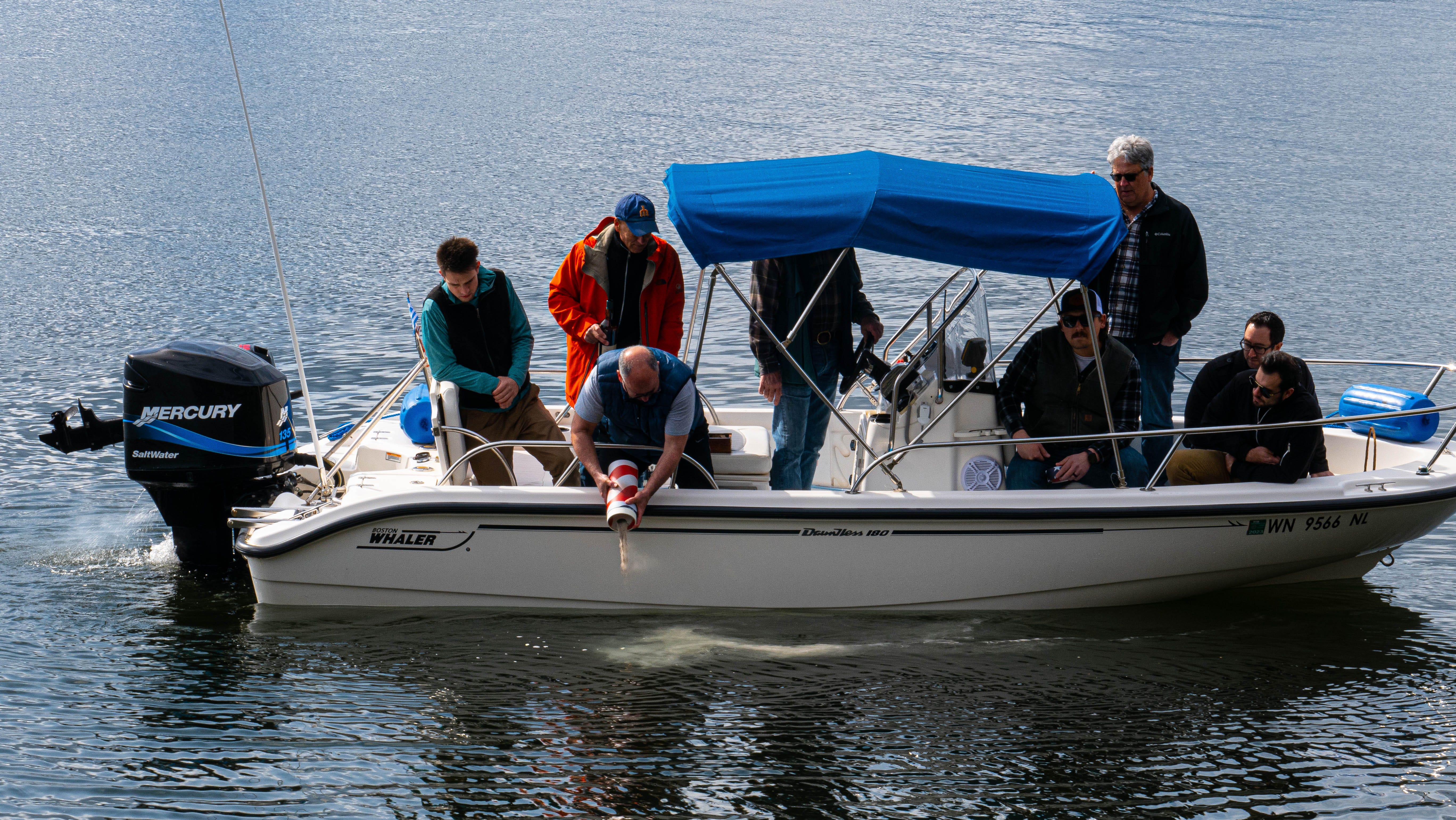
My dad had turned pale, roughly the color of the flamed-out charcoal in the bottom of a weathered kettle grill my wife and I keep on our back patio. I had never seen him—or anyone else—like this before: his bones pulverized to sand and floating momentarily on the water’s surface before sinking past the codfish and settling among the creatures that crawl along the floor of the Salish Sea.
I was beside myself, overcome with emotion that had only leaked out privately in the months following his death. Now, as I spilled his ashes among the flower petals we had scattered on our first loop around the glass-like water, I was blubbering in front of my two older brothers, three nephews, a son-in-law, and a family friend who had ferried us all onto the water in a center-consoled Boston Whaler.
Onshore, surrounded by family and a few old friends, my mother watched the informal ceremony unfold from the terraced decks of the home she and Dad built together in 1995. They had cherished the place, and Mom, now 90, delighted in seeing it preserved by its new owners pretty much as my folks had left it, kicking and screaming—sometimes at each other—five years earlier.
He died in November, four days before Thanksgiving. At the time, our mother was not well. With six weeks of holiday and family celebrations ahead, my siblings and I postponed the memorial until April, near his birthday, when life slowed down, and suitable plans could be made. In the meantime, Dad’s ashes rested inside a cardboard tube on a bookshelf in my home office, next to the remains of my parents’ beloved dog Pepé and my Golden Retriever, Lex. While working at my desk, I could feel Dad looking over my shoulder as I fumbled to manage the estate he left behind to care for my mother and struggled to rekindle the writing that seemed to die inside me in the last weeks of his life. The day before his memorial at Alderbrook Lodge, a charming waterfront resort 130 miles north of the Vancouver home I share with my wife, I carried the ashes downstairs and put them in the middle of the kitchen island. He had asked little of me in most of my 57 years, save for giving my best effort in whatever I pursued, mustering the resilience required to navigate the hard and harsh times he knew life would throw my way, and promising to scatter his ashes in the cold saltwater of Hood Canal. The last thing I wanted to do was make the long drive with the departed guest of honor still sitting on my bookshelf.
With his remains safely loaded in the car, the drive north took over two hours. In the quiet moments, when Mom drifted off to sleep in the back seat, and my wife, Andie, and our youngest daughter, Charlie, found solace in their own meditations, random memories bounced around in my head, triggered by landmarks I’d passed on this drive hundreds of times before. There was the Oak Tree Restaurant, not more than twenty miles from my childhood home, where we stopped for breakfast on the mornings when the cabin was calling, and Dad could not be bothered by the time it took his family to eat a bowl of Wheaties at home. Further north, the Toutle River, into which endless tons of sandy mountain ash flowed like wet cement, plucking tall trees from pristine Douglas fir forests and sending the whole grey mess west toward I-5 following the disastrous eruption of Mt. St. Helens in 1980. And the old Olympia Brewery in Tumwater, the last structure of note—unless you count the state capital building in the distance—before exiting I-5 and heading north on Highway 101 for another hour. With a gentle hand on the steering wheel and a gaze out the driver’s side window at the farmland near Chehalis, I wept quietly when I recalled sitting between my parents on the bench seat of a blue-grey Chrysler station wagon when I was five.
“CPat,” Dad would say, “if you’re playing shortstop with a runner on second base and one out, what do you do when a line drive is hit at you?”
Every long drive to the canal was the same—quizzes for which I thirsted about the rules and situations that present themselves in the game of baseball. I may have been among the smallest and weakest boys for every team I ever played, but none of my peers were more prepared for what to do with a baseball when it came their way.
Today, I catch myself resting my forearm on my head like he would when conversing casually with family or friends. I recognize his voice when I holler “Helloooo!” from the kitchen sink when someone comes through the front door. But aside from this genetic wiring, baseball felt like the only thing we had in common. He was brilliant, possessing an uncommon knowledge of the sciences, even among peers in the medical profession in which he worked. He read voraciously, mostly history and classic literature, but at the barber shop would skim articles from Sunset, Popular Mechanic, or Flying magazines while waiting for Rollie Mayberry, his barber for nearly sixty years, to trim his hair. In those periodicals, he would have read enough to participate in intelligent conversations—mostly by asking leading questions—with anyone he might run into who had an interest in growing tomatoes, cleaning the carburetor on a Briggs and Stratton engine, or touch-and-go landings in a Cessna 206. In this way, he could talk to almost anyone. He possessed a vast and wicked vocabulary and a memory that, even at 90, enabled him to recite archaic poetry he learned in high school to anyone who would listen, often to my embarrassment. He was athletic and, until his body broke down in his late 40s, could waterski, springboard dive with precision, and his mastery of traditional American team sports was evident whenever we played horse in the driveway or tackle football in the front yard. By contrast, I am of modest intelligence and nearly failed high school biology. I would not say I liked reading until the boredom of long minor league bus rides led me to the novels of Pat Conroy. And the only thing I was ever good at—at least briefly—was playing baseball. Indeed, baseball was the bond we shared, and my dad, bless his proud heart, thought I was the best.
My siblings and I had never been to Alderbrook before, although we had heard of the resort for decades. Located on the eastern shore of Hood Canal’s southern tip, the surrounding area was said to be the hiding place of the Nordstrom and Gates families. Rumor has it that when they tired of the lights from highway traffic invading their compounds, rather than planting hedges, the two families combined resources and had the highway moved.
Whether the story is true or not, it helps describe the stark difference between the getaways of the world’s wealthiest families and that of my parents.
In the fall of 1971, my dad used a $6,000 loan from his folks to buy a property on top of a rock outcropping known as Triton Head, a secluded chunk of land that sits proud of the canal’s mostly smooth western shoreline. Surrounded by tall Douglas fir and the red, peeling bark of gnarly madrona trees were two distinct buildings—the “cabin” and the “cottage”—separated by forty feet of crushed rock so sharply angular it could not be crossed on bare feet. Each building was approximately 12 feet wide by 24 feet long, with gently sloped gable roofs and eaves that Dad could touch while standing under them.
The whole family slept in the back cottage on three sets of metal frame bunk beds at night. Other amenities included a pair of laundry machines; a chest-style freezer packed with ice cream and two-pound packages of ground beef wrapped in white butcher paper; and a bathroom with a toilet, a wall-mounted sink, and a window overlooking a semi-private beach below defined by massive logs that had once bobbed on the canal’s often choppy seas before storms and the high tides of winters past deposited them where kids like me could lean against them while tossing pebbles into a well-stoked campfire. The walls were unfinished, and the light from a single overhead bulb in the center of the room reflected off the foil-backed insulation stapled between exposed wooden studs. At night, our dog Sam would click her toenails endlessly on the linoleum tile floor as she paced around the room in the dark, and the water pipes whined like a steam whistle each time the toilet was flushed, making whoever had to pee in the middle of the night the target of a collective Sperry groan.
The main cabin was finished with fake wood paneling, shag carpeting, one tiny bedroom, and a bathroom with a small molded shower. In the main room, the kitchen was defined by a porcelain sink on the exterior wall and a rolling buffet cart that provided the only counter space. When not used, it was moved against the sink to provide walking space to the bathroom. The building was surrounded by a wooden deck made of untreated 2x4s. A 2x4 handrail bordered the whole thing, but there were no balusters to protect a pet or a small child who wandered too close to the edge of the deck. Its architecture may have been a far cry from the more esteemed properties near Alderbrook, but our modest family cabin enjoyed more than 300 feet of waterfront. When the moon pulled the water high onto the rocks, a Sperry boy could spit a lougee into the sea.
Soon, there was a boat—a beat-up old Chriscraft, 16 feet long with a 35 HP salt-corroded outboard motor hanging from its stern. My brothers and I learned to water ski behind that boat. And to haul crustaceans from the canal floor, spooling as much as 300 feet of yellow nylon rope by hand using a homemade winch that spanned the gunwales toward the back of the boat. Back on land, he taught his boys how to bait the traps using frozen chicken and canned cat food, how to tie a Bowline knot that “will never come undone,” and how to steam the catch outdoors on a Coleman stove so as not to stink up the cabin.
We visited those two little shacks frequently on weekends and for weeks during August after Dad had finished coaching my oldest brother Mike’s Babe Ruth League baseball teams. For my siblings and me, it was a place of wonder, exploration, and freedom—where a six-year-old boy could pedal a black, single-speed, hand-me-down Schwinn on a network of fern-covered dirt trails and gravel roads without fear of abduction. For my dad, it was an escape from the pressures of running a medical practice and what he feared most—aside from losing a child: having a patient die on the operating table. It was the place on Earth that he loved most.
I come from a baseball family, so each of us has spent our life watching, playing, coaching, or writing about the game. One of us was even crazy enough to dabble in umpiring for a time. We rooted for one another until the flame of our modest careers was blown out. We cheered for the Cincinnati Reds, Pittsburgh Pirates, Seattle Mariners, and Chicago Cubs. When I signed with the Los Angeles Dodgers, we were forced to pull for them, too.
Dad, of course, inspired it all.
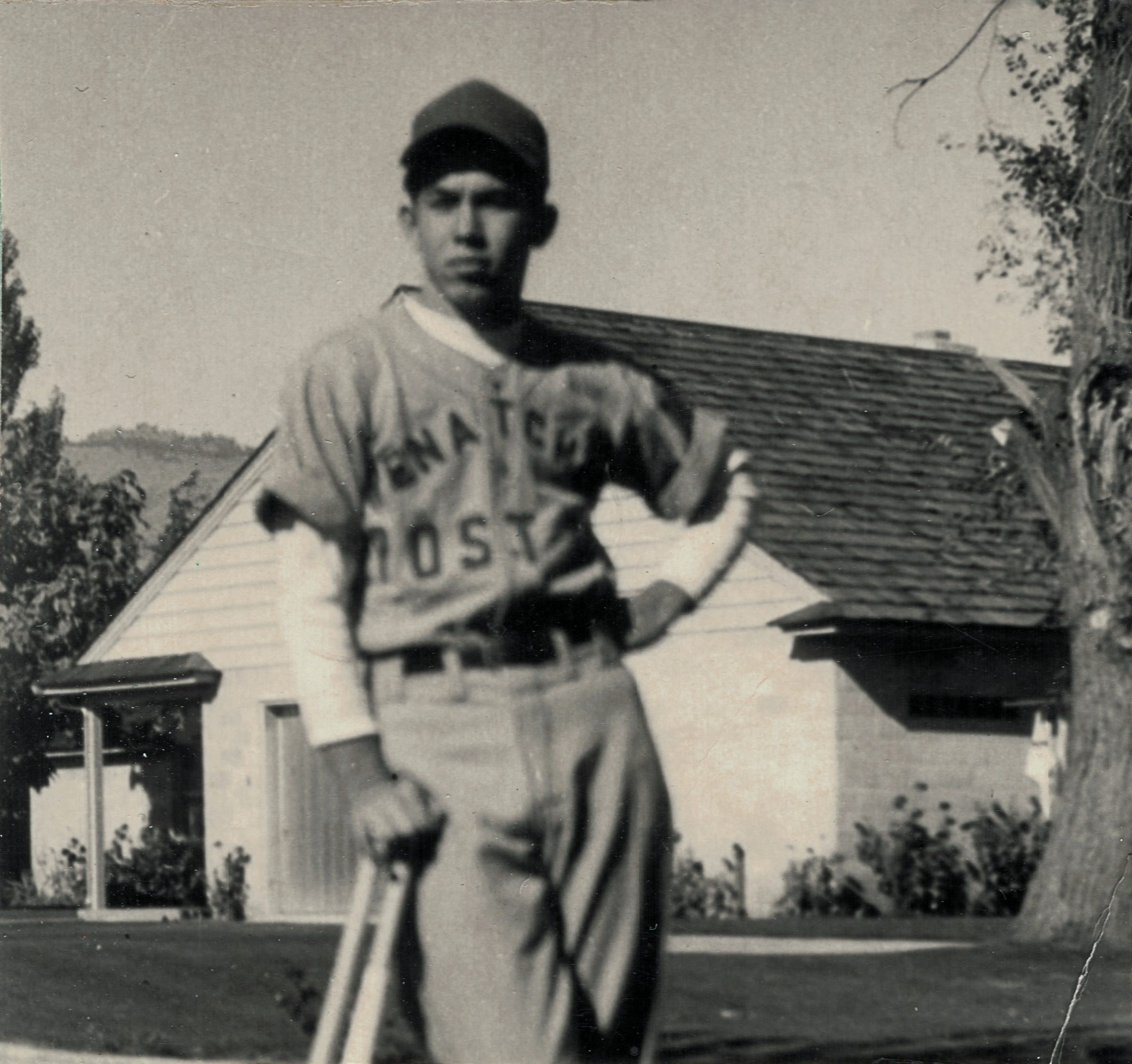
When he was seven years old, Don Sperry would run several blocks from his Wenatchee home to nearby Rec Park to watch an outfielder named Loyd Christopher of the Class-B Wenatchee Chiefs. When he did not have money for admission, he would watch the power-hitting outfielder through knotholes in the outfield fence. In 1939, Christopher’s only year in the Western International League, he hit .353 with 31 homers. Later, my dad’s dreams of roaming Rec Park were realized when he played high school and American Legion baseball on the same field.
After an unfortunate decision to ride in the front seat of a new car driven by a wealthy acquaintance liquored up on cheap whiskey, Dad soberly broke both his legs, ending his playing career at the University of Washington. While a student there, he began coaching in Seattle youth leagues. Later, he coached Babe Ruth teams in Vancouver with Charlie Valentine, a rugged road construction contractor with a deep scar on his chin and a penchant for unfiltered Camel cigarettes, and Gerry Staley, a veteran of fifteen MLB seasons who once taught a soft-throwing righthander how to step eight inches in front of the rubber with his pivot foot to make his pus-filled fastball look harder than it was. I was four or five years old the first time I remember sitting in a dugout listening as Dad coached the game, celebrated good performances, and leaned on kids who weren’t tough enough or wore their hair too long. When I was old enough to play organized baseball myself, he would drive us to Columbia River High School and throw batting practice to me against a galvanized chainlink backstop until the sun went down. He made me a switch hitter on those warm summer evenings, a skill that inarguably extended my playing career by a decade.
He coached me formally only one summer; I was fifteen. During pregame infield practice, he would hit routine ground balls to my teammates in the infield, who would pick them up and toss them casually to first base. When it was my turn, he would sizzle one-hop missiles in my direction, then expect me to field them in rhythm and make strong throws across the infield.
“Sper,” a teammate once said, “is your old man pissed at you?”
When I got to high school and was around seasoned coaches who could point out my failures after games I had misplayed, the last thing I wanted to do was go home for another dress-down from my old man. I would stay out on those nights until I was sure my folks were asleep. I would open the back door while holding my breath, exhale in relief when the alarm chime did not sound, and, starving, tiptoe my way to the kitchen in the dark for something to eat. When I flipped on the lights, I would be startled to find him sitting in the din of the adjacent family room, wearing a bathrobe and ready to pounce.
Dad’s favorite team was the New York Yankees. His favorite player was Lou Gehrig—as much for the man’s character as for his prodigious baseball talent. When he was a young father rooting on his team from the outfield bleachers at Comiskey Park in Chicago, he once missed seeing an extra-inning, go-ahead home run hit by Mickey Mantle because when the crowd stood en masse, Dad was stuck in his seat with my sister Michele asleep on one shoulder and my oldest brother Mike on the other.
In 1989, my college team played in the NCAA regionals in Fresno, CA. After practice the day before the tournament started, my team and our families mingled in the hotel lobby when our athletic director introduced Dad to a scout for the San Francisco Giants.
“Don,” the AD said, “I’d like you to meet Lloyd Christopher.”
The old man lit up when Dad reminded him that, fifty years earlier, he hit .353 with 31 homers for the Wenatchee Chiefs.
The end was near.
Andie and I had met with the hospice team earlier in the day and were told Dad would likely pass within 72 hours. In the previous twelve hours, he had grown increasingly uncomfortable, thrashing around in his bed, incoherent and moaning, with his eyes glazed over. His body was weak and limp, and moving him to the edge of the bed to pee into a urinal bottle was all I could do. Eventually, the fentanyl was administered, and he rested peacefully until the drug wore off, and it was time for more.
From a rocking chair aimed at his bed, I watched him sleep beneath a turquoise Chief Joseph blanket—a treasure from the earliest days on Triton Head—and wondered which breath would be his last. Suddenly, he sat upright with the speed and agility of a track star, his eyes as clear as I’d ever seen them. He smiled wide, stacked his fists one on top of the other, and took a swing with a bat that he had imagined. He nodded excitedly as if to say, “I’ve had a look, CPat”—the name he called me, his youngest son, Christopher Patrick—“There is baseball in Heaven.”
In an instant, he was asleep again.
As the hospice team was preparing us for Dad’s death, one of the nurses explained that patients sometimes have visions of Heaven as their spirit readies itself to cross over. Nearly three years before Dad died, my buddy John Fazzolari was sitting at the bedside of his father Carlo, a diminutive Italian Little League coach revered by John and his neighborhood peers and a man who, in his 80s, was still playing organized softball. As he was known, Mouse was sitting up in his hospital bed, wide awake, watching a pitcher throwing electric fastballs to the catcher.
“I don’t know, Johnnie,” he said, “this guy’s throwing awfully hard. Do you think I should choke up or use a lighter bat?”
The television was off; John could not see the game Mouse was watching, apparently from the dugout or perhaps the on-deck circle of a manicured field with a manual scoreboard.
“I’d grab a lighter bat, Dad,” John said.
“Either way, I think I’ll lay one down. The third baseman is playing back.”
John played along.
Two days later, Mouse was gone, but not before having had an unforgettable baseball conversation with a son he loved.
By sharing the story, John brought me to tears. I bear-hugged my friend, knowing I would write about Mouse’s death one day. I did not know that it would take the passing of my own father to draw it out of me.
I hope there is baseball in Heaven. And that my faith enables me to trust in God’s promise: that despite my sins, he may include me in his Kingdom forever. I pray I’ll walk onto the infield again—freshly mowed with a reel and smelling of summer—without pain in my knees, back, and shoulder. I long for the quick twitch fiber of muscles I once had, which I’d love to rediscover while throwing a dart across the infield or legging out a triple in the gap.
I look forward to the absence of synthetic grass, the designated hitter, outfields infested with poa annua—the real Devil’s lettuce—and leagues commissioned by Rob Manfred.
It would be cool, I think, to have a catch with my old man again. Better yet, to play a game beside him, as Ken Griffey, Jr. did with his dad for the Seattle Mariners in 1990. Something tells me that Dad, with his own wrecked and worn-out body reborn, did not wait for me. Nor should he; by now, he probably has 70 games under his belt, having reconnected with Charlie Valentine and Gerry Staley. I want to think he is reunited with Milo Meskel and Curt Daniels, mentors who helped grow my passion and love for the game—men I miss as much as my father.
I can see him dancing around at shortstop, jockeying a runner back to second base with one out, as the memory of so many car ride quizzes returns. I hope a line drive is peppered his way.
My old man will know just what to do.
Thank you, Judge. Nice to catch up with you this week.
Sweet CPat. Touching and thoughtful. With love, your sis.